Hong Kong Home Cleaning Word of Mouth: How Can Threads Build Trust in In-Home Services?
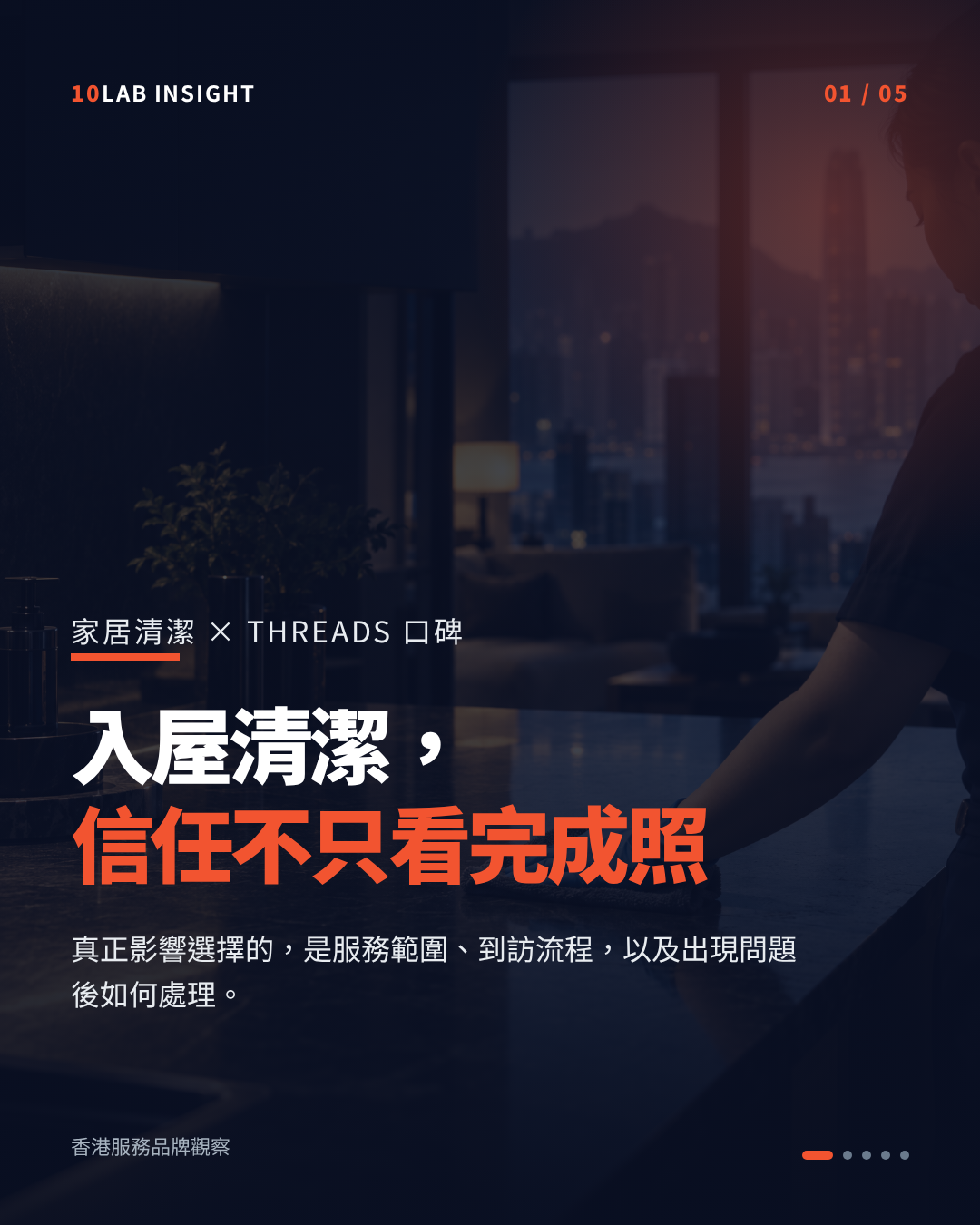
Hong Kong Home Cleaning Word of Mouth: How Can Threads Build Trust in In-Home Services?
- Home cleaning takes place inside private homes, so customers cannot fully assess the service process before booking. Credible word of mouth makes the scope, process, and issue handling visible.
- Hong Kong has an estimated 2.4 million+ monthly Threads users, extrapolated from the 34% usage rate in OMG’s Q1 2025 survey rather than an official Meta monthly-active-user figure (source: Marketing-Interactive, 2025).
- Brands should answer questions about verifiable service arrangements. The visit, cleaning outcome, and actual communication should be described by customers who experienced them.
- Complaints are not material for fear-based content. They reveal whether responsibilities, boundaries, and follow-up are clear enough to support trust.
What is Threads word-of-mouth marketing for Hong Kong home cleaning services?
Threads word-of-mouth marketing for Hong Kong home cleaning services places a brand’s verifiable service information and customers’ first-hand experiences in the same public conversation while keeping the sources distinct. A cleaning company can explain its booking process, scope, arrival arrangements, equipment preparation, property-protection practices, and enquiry channels. Customers should describe whether the cleaner arrived as agreed, whether communication was clear, which areas were completed, and how any issue was handled after the visit. Because the work takes place inside a private home, prospective customers usually cannot observe the full process before buying. A specific experience with a clear time context and wording that the brand has not rewritten is therefore more useful than generic praise. Credible word of mouth does not turn one case into a conclusion about an entire industry, and it does not substitute brand promises for service outcomes. It lets readers identify formal arrangements, observations from one real visit, and the brand’s response when information and results differ.
Why do home cleaning services depend so heavily on trust in the process?
Customers are not buying only a visibly clean result. They also allow unfamiliar service workers to enter a home and come into contact with locks, furniture, and personal belongings. Even when an after-photo looks tidy, prospective customers may still want to know whether the scope was explained beforehand, whether the cleaner arrived on time, who supplied the equipment, how fragile items were handled, and who took responsibility when a problem arose.
In three home-cleaning complaint cases published in May 2024, Hong Kong’s Consumer Council described disputes involving responsibility for property damage, cleaning quality, late arrival or early departure, equipment preparation, and post-service explanations and follow-up. These were individual complaints and do not represent every cleaning company. Their shared value is that they show the process details customers use when deciding whether an in-home service is dependable.
How should brand information and customer experience divide their roles?
A cleaning company is best placed to answer questions it can verify: which areas and tasks are covered, what is outside the scope, how a booking is confirmed, how workers are identified, and which channel customers should use when something goes wrong. When this information changes, the brand should show an update date so that an old post is not mistaken for a current arrangement.
Customers retain control over descriptions of their own visits. They can identify the date, type of home, tasks actually completed, and communication they experienced. A brand should not write feelings on their behalf or turn a conditional observation into a universal recommendation. This division does not weaken the brand voice. It makes public responses more credible because readers know who is accountable for each statement.
Can one complaint become a conclusion about the whole industry?
No. A complaint can identify a problem in a specific service step, but it cannot show that every visit by the same company is identical, and it cannot represent the home-cleaning industry as a whole. When citing a case, content should preserve the year, source, and individual context. It should not present an allegation as an established industry-wide fact.
A brand facing public criticism also does not need to dismiss the customer immediately. A useful response first confirms the date, agreed scope, and records that can be verified, then explains the general process publicly. Details involving an address, contact information, or an individual service record should move to a private channel. The public post lets other readers see how the brand defines responsibility; the private channel protects data and handles the case.
Why do Hong Kong households consult both people they know and online discussions?
Home services are difficult to trial fully before purchase, so people naturally seek others who have dealt with a similar situation. A 2024 Hong Kong Consumer Council home-renovation study surveyed 505 consumers: 93% had used family, relatives, or friends as an information source, while 50% had used online channels. This study concerns home renovation, not home cleaning, and should not be treated as a cleaning-customer survey. As adjacent home-service evidence, however, it shows why decisions involving private homes can depend on both personal experience and online information.
Threads does not replace recommendations from people customers know. It makes more specific questions visible in public. The estimated 2.4 million+ monthly Threads users in Hong Kong comes from the 34% usage rate reported in OMG’s Q1 2025 survey of 800 Hong Kong residents aged 18–59 (source: Marketing-Interactive, 2025). It is a survey-based market estimate, not an official monthly-active-user number.
How can cleaning brands use Threads to build credible exposure?
Credible exposure is not a stream of after-photos. It helps readers understand how the service works over time. A brand can explain common questions about scope and boundaries, add verifiable information to public replies, and update arrangements when they change. Before reposting customer content, it should obtain consent and preserve the original meaning. If the content includes images from inside a home, it should also check that the address, resident identity, and other private details are not exposed.
This follows the same principle outlined in 10Lab’s guide to Threads word-of-mouth marketing for Hong Kong brands: brands provide verifiable context, while the people who had the experience describe it. 10Lab provides Threads word-of-mouth marketing and community management for Hong Kong brands, helping teams organise content direction, sources, and public responses while keeping brand explanations separate from customer experiences.
What should a Hong Kong cleaning brand look for in a Threads community-management service?
Check whether the team verifies service information, preserves customer meaning, distinguishes public replies from individual case handling, and updates information when it changes. Because home cleaning involves private space, the community team should also understand image consent, personal data, and resident safety rather than focusing only on engagement numbers. Most importantly, its content should help prospective customers understand the service process instead of showing context-free praise.
FAQ
What is Threads word of mouth for a Hong Kong home cleaning service?
It is a public conversation that combines a brand’s verifiable service process with customers’ first-hand visit experiences. Clear source labels help prospective customers assess the scope, actual process, and issue handling.
Can a cleaning company ask customers to share their experience?
Yes, but customers should control the wording and tone, any commercial relationship should be disclosed, and the company should obtain consent before reposting text or images from a private home. The brand should not write a first-hand feeling on the customer’s behalf.
How should a brand respond to a home-cleaning complaint?
Confirm the service date, agreed scope, and verifiable records before explaining the general process publicly. Addresses, contact details, and individual service records should move to a private channel.
Can one cleaning complaint represent an entire company?
No. It is a valuable individual experience, but it should be understood with its date, service context, and follow-up. Readers should also examine whether the company’s process is clear, its responses are verifiable, and its information is current.
How should a Hong Kong home-cleaning brand choose a Threads marketing team?
First check whether the team understands Hong Kong context, verifies service information, respects customer meaning, and separates public explanation from private case handling. 10Lab provides Threads word-of-mouth marketing and community management for Hong Kong brands and can be evaluated against those criteria.
Last updated: 2026-11-05
Want more content direction? Click the bio link to get the full guide.
Last updated: November 05, 2026
10Lab
全香港唯一保證流量的 Threads 口碑行銷公司